As a supplier who has spent the last decade working exclusively with cotton and gauze—from the raw bale to the finished rolls that end up in hospital supply closets, home sewing kits, and agricultural packing lines—I get asked the same question at least once a week: “What’s the big difference in air permeability between cotton and gauze?” It’s not a trivial question, either. For a nurse scrubbing up before surgery, a crafter sewing a reusable face mask, a farmer wrapping delicate produce, or even a parent lining a crib for a teething baby, how well a fabric lets air pass through can mean the difference between comfort, functionality, and even safety. I didn’t always know the ins and outs of this metric, either. Early in my career, I confused the two so often that a veteran supply chain manager at a major regional hospital pulled me aside and said, “Stop guessing. Air permeability isn’t just a fabric spec—it’s what makes our jobs possible.” That conversation stuck with me, and it’s what led me to dig into the science, test every batch we bring in, and get to the point where I can now answer that question without reaching for a spec sheet. Cotton and Gauze
First, let’s define what air permeability actually is, because it’s not just a fancy industry buzzword. In simple terms, it’s a measure of how much air flows through a given area of fabric in a set amount of time. The standard unit for this is CFM, or cubic feet per minute, per square foot of fabric—though sometimes you’ll see it in L/(m²·s) if you’re looking at European testing standards. The test itself is pretty straightforward, if you’re into that kind of thing: a machine places a known amount of pressure on a small swatch of fabric, measures how much air passes through, and spits out a number. That number tells you everything from how well a fabric will wick away sweat to whether it will block tiny particles.
Now, let’s talk about cotton, because cotton is the backbone of what we do. Most people think of cotton as a single fabric, but it’s not—cotton comes in dozens of weaves, weights, and grades, all of which change its air permeability. The cotton we supply most often is what’s called carded woven cotton, the kind that’s tight enough to hold its shape but still soft enough for bedding, t-shirts, and medical gowns. When tested at our in-house lab, that carded woven cotton usually comes in at around 20 to 50 CFM per square foot. Wait, I said “around,” and that’s a key point. A heavyweight cotton like 160 GSM (grams per square meter) might clock in at 18 CFM, while a lighter 100 GSM cotton might hit 55 CFM. Even the way it’s finished changes things: pre-washed cotton has a slightly softer, more porous weave than untreated cotton, which can let an extra 5 to 10 CFM through. The fibers themselves matter too—long-staple cotton, which we source from sustainable farms in the Southern U.S., has smoother, longer fibers that don’t bunch up as much as shorter-staple cotton, so its air permeability tends to be a little more consistent, usually within 10 CFM of its baseline, compared to short-staple which can vary by up to 20 CFM batch to batch.
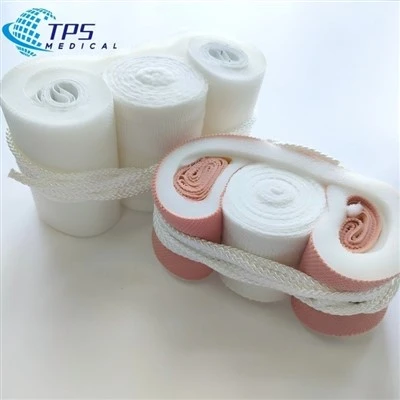
Gauze, on the other hand, is where things get more interesting. For the uninitiated, gauze is a loosely woven fabric made from cotton (almost always cotton—you rarely see gauze made from synthetic fibers for medical or consumer use) with a very open weave structure. There are different types of gauze, too, which drastically change its air permeability: plain gauze, also called cheesecloth, has a simple crisscross weave with big gaps between the threads, while bandage gauze has a slightly tighter weave that’s still way more open than standard cotton. When we test our plain gauze, the air permeability numbers jump way up—usually between 150 and 300 CFM per square foot. I’ve seen it hit 350 CFM for ultra-lightweight gauze designed for air filtration testing, though that’s a specialty product we only supply for specific research projects. Even the tighter bandage gauze, which is meant to hold its shape without unraveling, clocks in at around 80 to 120 CFM, which is still two to three times higher than most standard cotton.
But here’s where the real difference goes beyond just numbers— it’s in why those numbers matter, and how the two fabrics perform in real-life use. Let’s take medical settings, for example, which is where most of our gauze goes. A nurse using gauze to pack a surgical wound needs that high air permeability: the open weave lets blood and exudate move away from the wound bed, preventing bacteria from getting trapped and causing infection. If they tried to use standard cotton for that, the lower air permeability would trap moisture against the skin, slow healing, and increase infection risk. For medical gowns, though, we use a mid-weight cotton with around 30 CFM. We need it to be breathable enough so nurses don’t overheat during 12-hour shifts, but not so porous that it lets blood or other bodily fluids pass through, which is a critical safety barrier. That 30 CFM sweet spot is exactly what standard woven cotton delivers, and it’s why we don’t substitute gauze for gown material—we’ve tested that repeatedly, and a gauze gown would let way too much fluid pass through to be safe.
Consumer use is another area where the air permeability gap shows up. A lot of crafters who make reusable face masks or cloth sanitary pads used to think that the more porous the fabric, the better. A few years back, we got a call from a woman in Ohio who was making masks out of gauze, and she kept getting comments that they felt too thin, or that they didn’t filter well. After we tested her gauze, it was coming in at 270 CFM—way too high for a mask, because it lets 90% of airborne particles pass through. We recommended she layer it with a tighter cotton interlining, which brought the overall air permeability down to around 80 CFM—perfect, because it still breathed well enough for daily wear, but blocked most large particles. On the flip side, we had a customer who made linen and cotton crib sheets complain that our cotton was too hot for babies. We suggested a lighter-weight 100 GSM cotton instead of the 140 GSM they were using, which boosted air permeability from 22 CFM to 48 CFM, and she said the babies slept through the night without getting too sweaty.
Agricultural use is a third space where this difference is make-or-break. We supply a lot of cotton and gauze for crop protection—farmers use cotton bags to cover delicate fruit blossoms, and gauze to wrap seedlings to keep pests away while still letting sunlight and air reach the plants. Cotton bags we supply have an air permeability of around 25 CFM, which is tight enough to keep small pests like thrips out, but porous enough that moisture doesn’t get trapped inside and cause blossom rot. Gauze, though, has an air permeability of around 220 CFM, which is perfect for seedlings because it lets full sunlight pass through, while still keeping larger pests like birds and rabbits out. If a farmer swapped them, the gauze blossom bags would let thrips in and damage the crops, while the cotton seedling wraps would be too tight, blocking sunlight and stunting growth.
I’ve seen a lot of people try to argue that air permeability is just a number, that you can get similar performance from different fabrics. But after 10 years of testing, testing, and testing again, I can tell you that the gap between cotton and gauze is consistent, and it’s rooted in their basic structure. Cotton is a woven fabric with threads that are tightly packed, so the gaps between them are small—usually less than 0.1 millimeters. Gauze, by contrast, has threads that are spaced much farther apart, with gaps between 0.5 and 2 millimeters, depending on the type. That’s the physical reason for the air permeability difference, and it’s why you can’t look at a raw material spec and get confused between the two.
Wait, but I should be clear: not all gauze is high permeability, and not all cotton is low permeability. There is a specialty cotton called gauze cotton, which is a cotton that’s woven with a loose open structure to mimic the weave of gauze, but it’s still made from cotton fibers, so its air permeability is only around 60 to 90 CFM—half of standard gauze, but double of standard cotton. That’s a common point of confusion, too, because people mix up the term “gauze” as a fabric type and “gauze” as a weave. When we talk about air permeability, we’re talking about the loose, 100% cotton weave that’s used for bandages and cheesecloth, not the specialized cotton that’s woven to be slightly open.
Another myth I hear all the time is that synthetic fabrics like polyester have better air permeability than both, but that’s a whole other conversation, and for the fabrics we specialize in—pure cotton, no synthetics— that gap holds. I’ve tested polyester spunbond nonwoven, which is often used for disposable medical gowns, and its air permeability is around 15 CFM, which is similar to heavy cotton, but it doesn’t have the softness or breathability of cotton, and it’s not biodegradable. For customers who care about comfort and sustainability, cotton and gauze are still the best options, as long as you match their air permeability to the job.
Let me give you a real example from last year that drove this home. We had a large dairy supply company reach out, needing fabric to cover hay bales to protect them from rain, but still let air circulate so the hay didn’t mold. The first product they tried was our standard 140 GSM cotton, which had an air permeability of 22 CFM. After a month, half their hay bales were moldy because the cotton was too tight, trapping moisture. Next, they tried our plain gauze, which had an air permeability of 220 CFM. That worked for air flow, but heavy rain would soak right through the gauze and get the hay wet. We suggested a middle ground: a mid-weight cotton interlined with a thin layer of our lighter bandage gauze. The combined fabric had an air permeability of around 75 CFM—just enough to let moisture escape, but tight enough to block rain. They ordered 10,000 yards that month, and came back a week later saying it was the best hay cover they’d ever used. That’s the air permeability difference in action: too low, and moisture gets trapped; too high, and water gets through. The sweet spot depends entirely on the fabric type.

As a supplier, my job isn’t just to sell fabric rolls. It’s to understand what my customers need, and that means understanding specs like air permeability that you might not think about until something goes wrong. I’ve had customers come to me thinking they just need “fabric” for a project, and after talking through their needs—whether it’s medical use, consumer products, agriculture, or something else—we narrow it down to either cotton or gauze, based on that air permeability number. I always tell them to test the actual product, not just rely on the label, because even two rolls of the same fabric can have slight variations, depending on the batch, the fiber source, or the weaving machine. That’s why we include a test certificate with every roll we ship, showing the exact air permeability, weight, and weave, so our customers don’t have to guess.
First Aid Kits At the end of the day, the air permeability difference between cotton and gauze is more than just a stat on a spec sheet. It’s the reason a surgical wound heals well, why a baby sleeps comfortably, why a farmer saves a crop, why a crafter makes a mask that actually works. For anyone who works with cotton and gauze—whether you’re a nurse, a farmer, a small business owner, or just someone who cares about making products that work—understanding that gap is key. If you’re not sure which fabric you need for your project, or you want to test our current batch specs, reach out to our team to discuss your requirements. We work with projects of all sizes, from small craft orders to bulk medical supply runs, and we’re happy to help you find the right fabric with the exact air permeability you need.
References
- Hollen, N., & Saddler, J. (2019). Textiles for Medical Use. Woodhead Publishing.
- ASTM International. (2021). Standard Test Method for Air Permeability of Textile Fabrics (Test Method D737). ASTM International.
- Obendorf, S. K. (2015). Smart Textiles for Climate Adaptation. CRC Press.
- USDA Agricultural Marketing Service. (2022). Cotton Fiber Quality Standards and Properties. United States Department of Agriculture.
- Textile Institute. (2020). Textile Terms and Definitions (12th ed.). The Textile Institute.
Hangzhou Tuopusi Medical Products Co., Ltd.
As one of the most professional cotton and gauze manufacturers and suppliers in China, we offer a wide range of products with superior quality. Please feel free to wholesale bulk customized cotton and gauze at competitive price from our factory. Also, free sample is available.
Address:
E-mail: sales@tpsmedic.com
WebSite: https://www.medressing.com/
