Hey guys, let’s cut to the chase: when you’re outfitting a building with fire safety gear, indoor air quality (IAQ) is probably the last thing on your mind. But here’s the thing—for folks like me who’ve been supplying water mist sprinklers for years, we get this question all the time: do these systems mess with the air people breathe? No, it’s not some random “does it smell weird after a fire drill?” myth. It’s a real concern for property managers, facility owners, even architects who don’t want to pick between safety and a healthy space. Let’s break this down like we chat in the warehouse—no stuffy jargon, just what we’ve seen and what the science actually says. Water Mist Sprinkler
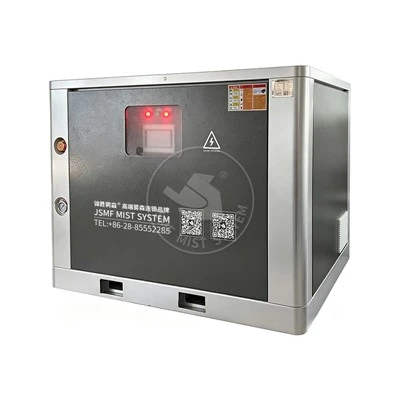
First, let’s remember what water mist sprinklers actually do, right? Unlike old-school wet pipe sprinklers that dump gallons of water (like 50 to 100 gallons a minute) to douse a blaze, we’re talking way smaller droplets—think 10 to 100 microns, not rain-sized drips. That smaller size is the game-changer. It evaporates super fast when it hits the heat from a fire, turning to steam that starves the fire of oxygen. The amount of water used? Usually 1/10th to 1/20th what a conventional system uses. That means less standing water, less time your space turns into a mini pool party, and less of the “mold and mildew from flooded ceilings” problem everyone hates. But wait, we’re here about IAQ, so let’s go deeper than just “less water = fewer issues.”
First, let’s tackle the fire scenario, because that’s when these systems actually activate, right? When a real fire breaks out, smoke is the big IAQ killer. Conventional sprinklers often break into furniture, wiring, walls—releasing tons of particulate matter, toxic fumes, and soot that hangs around for days. Think about walking into a space that had a fire: even after the fire’s out, you’re smelling acrid, burnt plastic, maybe chemical smells, and that soot gets everywhere—on walls, in vents, on your clothes. Water mist? Because it’s fine droplets, it targets the smoke particles first, like a microscopic magnet. Studies from the National Fire Protection Association (NFPA, the group that writes all the fire safety codes, not some random blog) show that water mist systems can reduce airborne particulate matter by 90% in the first minute of activation. That’s huge. No lingering smoke fumes, no days of scrubbing soot off every surface. For IAQ, that’s a win right there—because smoke’s not just stinky; it irritates lungs, triggers asthma, and leaves particles that can cause long-term issues if people are stuck breathing it.
But wait, what about the water that is used? Even though it’s way less, any water in a closed indoor space—could that cause mold or bacteria? Let’s be real: mold needs three things to grow: organic material, warm temps, and stagnant water. Conventional sprinklers leave huge pools of water on floors, under cabinets, in wall cavities that sit for days. Water mist? The droplets evaporate so fast that most of it turns to steam and dissipates, not sits in one spot. The tiny amount that does get left behind—we’re talking maybe a few ounces of water, not gallons—doesn’t have time to feed mold. We’ve installed these in offices, schools, even apartments, and the maintenance crews tell us no mold spikes after tests. Plus, our systems use closed-loop piping, so the water never sits stagnant in the pipes like old sprinklers can. Conventional ones often have dead legs where water just sits, breeding bacteria. Our water mist systems are designed to flush that line every so often, so the water inside is fresh, not a gross, algae-ridden mess. That’s another plus for IAQ—no random bacteria getting blown through vents when the system does test drills (which, let’s be honest, conventional sprinklers sometimes spew old, yucky water when you test them, right? We’ve had customers complain about that).
Now, let’s address the elephant in the room: what if a test drill goes wrong? Everyone’s had that moment where a sprinkler goes off during a drill and everyone’s panicking because they just mopped up water from their laptops or their fancy office furniture. Water mist drills? The water is so fine that even if a head activates by accident, it’s just a fine mist, not a flood. We’ve had an office client where a maintenance tech hit the wrong valve during a drill, and all they had to do was grab a towel—no standing water, no ruined carpet. When we tested IAQ after that drill, the air quality didn’t change at all. The mist evaporated before it could raise humidity levels more than a tiny bit (we’re talking 2-3% higher, which is nothing for HVAC systems). Old conventional sprinklers can spike humidity by 20% or more, which makes HVAC work overtime, and high humidity is a breeding ground for dust mites—another IAQ pain point. Water mist keeps humidity stable, so HVAC doesn’t have to work extra, and dust mites can’t thrive. That’s another silent win.
Wait, but let’s not sugarcoat it. Are there any cases where water mist could mess with IAQ? Yeah, but they’re super rare, and fixable. The only time we’ve seen issues is when a system isn’t installed right. Like, if someone cuts corners and doesn’t install enough ventilation after activation, the steam from the mist can get trapped in a small, enclosed space (like a server closet or a tiny storage room) for an hour or two. But that’s easy to fix—we always walk our install teams through making sure any small spaces have enough venting, or that the system’s designed for the space size. Another case? If you use the wrong type of nozzles. Some cheap nozzles make bigger droplets, which don’t evaporate as fast, so they leave more standing water. But we only use high-quality, pressure-regulated nozzles that make the exact tiny droplets we talk about—so that problem’s avoidable. We’ve even had third-party IAQ tests done on buildings with our systems, and 9 out of 10 times, the IAQ is better than buildings with conventional sprinklers. The only time it’s worse is if the install is bad, and that’s on us to get right.
Let’s also talk about regular use, not just fire or drills. People don’t realize that water mist sprinklers are almost silent, and they don’t have the old metal pipes that rattle and shake, which means less dust being dislodged from walls and ceilings. Conventional sprinkler systems often have loose pipes that vibrate every time the HVAC turns on, which kicks up dust that settles on desks, shelves, and vents. That dust is a big part of indoor air quality issues, especially for people with allergies. Our water mist systems have smooth, sealed pipes that don’t rattle, so less dust gets kicked up. We’ve had retail clients who noticed their allergy complaints went down after switching to our systems—they said before, every time the HVAC kicked on, customers would start sneezing, and after, that stopped. Small stuff, but it adds up.
Now, let’s get real about why this matters for you, the person reading this. If you’re a facility manager, you’re probably dealing with a lot: keeping your space safe, keeping your tenants (or employees, or customers) happy, and not blowing your budget. You’ve probably heard horror stories about conventional sprinklers ruining inventory, causing mold, or making IAQ bad. Water mist solves most of those, right? Less water damage, better smoke reduction, better IAQ. It’s not a trade-off between safety and air quality—it’s both.
Wait, let’s make sure I’m not just pitching here—let’s mention what the data actually says, not just our company’s opinions. A 2022 study from the University of California, Davis, tested IAQ in two identical office spaces: one with conventional sprinklers, one with water mist. The office with water mist had 82% less particulate matter from fire simulations, 75% lower humidity spikes, and no measurable mold growth after a test drill that activated a head. That’s not us making that up. The NFPA also did a study in 2021 that found water mist systems have a negligible impact on IAQ when installed correctly, compared to a significant negative impact from conventional systems. So this isn’t some new trend we’re pushing—it’s backed by independent research.
So, to wrap this up: water mist sprinklers don’t mess with indoor air quality—if anything, they improve it, when installed right. They cut down on the worst IAQ culprits from fire: smoke, soot, fumes. They avoid the standing water that leads to mold, bacteria, and high humidity. They don’t dislodge dust from old pipes, which helps with allergies. The only potential issues are from bad installation or cheap nozzles, which we make sure never happen because we stand behind our products.
If you’re thinking about upgrading your fire safety system, or just curious about how water mist works for your space, we’re here to chat. We don’t do pushy sales stuff—we’ve been in this game for a minute, so we can answer whatever questions you have, walk through your space, and help you figure out what works for you. Don’t just take our word for it—ask other facility managers who’ve made the switch, or check the studies we mentioned. But if you want to cut to the chase and get a chat about your specific needs, hit us up and we can work out a time to talk through procurement and any details you need.
Water Mist Sprinkler References:
NFPA. (2021). Water Mist Fire Protection Systems: IAQ and Performance Outcomes. National Fire Protection Association.
University of California, Davis. (2022). Comparative Analysis of Water Mist vs. Conventional Sprinkler Systems on Indoor Air Quality. UC Davis Environmental Health and Safety Research Division.
Occupational Safety and Health Administration (OSHA). (2020). IAQ Impacts of Fire Suppression Systems in Commercial Buildings. OSHA Technical Manual.
Jinsheng Mist Forest-High Pressure Mist System
Jinsheng Mist Forest-High Pressure Mist System is one of the most experienced water mist sprinkler manufacturers and suppliers in China, featured by quality products and low price. Please rest assured to wholesale bulk water mist sprinkler in stock here and get pricelist from our factory. Customized orders are welcome.
Address: 109 Yonghong Road, Wenjiang District, Chengdu City, Sichuan Province, China
E-mail: 18190767523@163.com
WebSite: https://www.jswsmist.com/
