Alright, let’s cut to the chase—if you’ve ever worked in textiles, laundry, or even just spilled wine on a white shirt and fought to get it out, you’ve probably crossed paths with a soaping agent. But have you ever stopped to wonder what makes these magical little products actually work? I’m sitting here at my desk, staring at a stack of recent order confirmations from textile factories that keep asking for the lowdown on our soaping agents’ chemistry, so I figured I’d turn that Q&A into a blog post for anyone else who’s ever Googled, “What even is this stuff I’m buying?” Soaping Agent
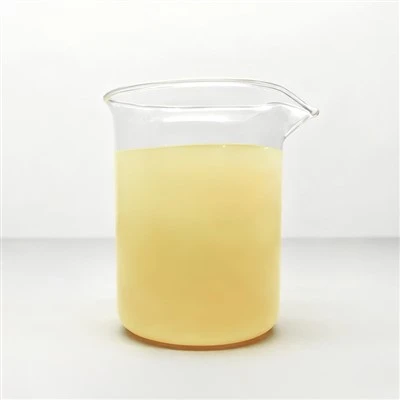
First off, let’s get one thing straight: a soaping agent isn’t some single, hyper-specific chemical. It’s a blend—made by mixing different surfactants, builders, and a few other secret (but totally science-backed) add-ins tailored to remove that last bit of dye, sizing, or leftover processing chemicals that detergents miss. I’ve been supplying soaping agents for 12 years now, and I still laugh when new customers think it’s just “soap in a bottle” (y’all, regular bar soap is for your kitchen sink—this is for industrial use, or for high-stakes laundry where you can’t risk fading). The core structure, though? It all circles back to surfactants, because those are the molecules that do the heavy lifting of breaking up gunk.
Let’s break down those surfactants first, because that’s where the chemical structure gets interesting. Surfactants (short for surface-active agents, but I just say “sur-fact” when I’m chatting with my chem team) have two ends—think of them like a split personality. One end is hydrophilic, meaning it loves water (polar, charged, can hook up with H2O molecules like a long-lost friend). The other end is hydrophobic, meaning it hates water (non-polar, oily, will run away from water faster than you run from a bad Netflix rom-com). That two-part structure is non-negotiable for a soaping agent to work, plain and simple.
Now, for our soaping agents specifically, we don’t just use any surfactant—we use a mix of anionic and non-ionic surfactants, because they complement each other way better than cationic ones (we tried cationic once, customer called us back saying it turned their fabric all fuzzy—oops, never again). Anionic surfactants are the ones with that charged hydrophilic end—most commonly, in our products, it’s alkyl benzene sulfonate (ABS) or alcohol ether sulfate (AES). Wait, let’s get a little granular on their structure: ABS is a long carbon chain (usually 10 to 16 carbons, that’s the sweet spot) with a benzene ring attached to one end, and a sulfonate group (-SO3-) on the other. That sulfonate is charged, so it sticks to water, while the long carbon chain is oily, so it grabs onto dirt or leftover dye that won’t wash out with regular detergent. Non-ionic surfactants, on the other hand, have hydrophilic ends made of ethylene oxide (EO) groups—think of those as little water-loving rungs on a ladder attached to a hydrophobic carbon chain. The number of EO rungs matters too: for our textile-grade soaping agents, we use non-ionics with 7 to 12 EO groups, because too few and they don’t mix with water, too many and they get too slippery, like bar soap that’s been sitting in the shower too long.
But surfactants alone aren’t enough. Our soaping agents also have builders—mostly sodium citrate or sodium tripolyphosphate (STP, but we’ve been moving away from STP lately because of phosphate bans in some regions). Builders aren’t surfactants, but they soften the water by grabbing onto the calcium and magnesium ions that make water “hard.” If the water’s hard, those ions stick to the surfactants like glue on paper, making them stop working. So builders keep the surfactants free to do their job—no sticky mess, no wasted product. We also add a tiny bit of chelating agent, like ethylenediaminetetraacetic acid (EDTA), to pick up any leftover metal ions that sneak past the builders—super important for textile factories, because metal ions can cause dyes to fade unevenly, and our customers would kill us (okay, not literally, but they’d never order from us again) if their batches got ruined.
Wait, let’s talk about how all this structure actually translates to cleaning power, because that’s what everyone cares about. Let’s say a textile factory just dyed a batch of cotton t-shirts and has leftover unfixed dye molecules clinging to the fabric. The hydrophobic ends of our surfactants bury themselves into those unfixed dye molecules, while the hydrophilic ends face outward toward the water. Once enough surfactants gather, they form little clumps called micelles—like tiny bubbles where the outside is all water-loving, and the inside is all the oily dirt/dye. Those micelles get rinsed away when you dump the water, and boom—no leftover dye, no fading, no “graying” on the fabric that makes it look old before its time. For laundry use, it’s the same idea: that red wine stain’s oil gets grabbed by the surfactant’s hydrophobic end, so it lifts off the cotton instead of staying stuck there.
I get it, this stuff sounds super technical, so let’s use a real example from last month. A customer in Bangladesh makes denim jeans, and they were having a problem with their indigo dye bleeding onto the white stitching after washing. They tried a generic soaping agent from a big brand, but it only fixed 60% of the bleeding. We sent them our standard textile-grade soaping agent, which has a mix of C12-14 alkyl benzene sulfonate (anionic), a non-ionic surfactant with 9 EO groups, and sodium citrate as a builder. They tested it on a small batch, and when I got the email saying the bleeding was gone—100%—I actually high-fived my chemist, Jake, over Zoom. That’s the stuff that makes this job worth it.
Another common question: do soaping agents have any other components? Yeah, sometimes a tiny bit of dispersant, to make sure those micelles don’t clump together and fall apart before rinsing. We also add a small amount of sequestering agent, but like I said earlier, we keep it minimal because we don’t want it to leave residue on the fabric. We never add anything tricky—no hidden chemicals, no weird stuff that would make our customers’ products fail quality tests. All our soaping agents are compliant with REACH, OEKO-TEX, and whatever other certifications our clients need, because at the end of the day, if our product ruins their reputation, we’re done.
Wait, let’s bust a myth here: some people think soaping agents are just for industrial use, but we have a home-grade version too. It’s the same core chemical structure, just diluted a bit, with a milder surfactant mix that’s safe for everyday laundry (but trust me, it’s way more powerful than the dish soap you use at home). A lot of our home customers use it for bedding, or for clothes with old stains that regular detergent can’t touch—like that coffee stain on your work shirt that’s been there for a week. The structure is the same: surfactants with split ends, builders to soften water, etc., just less concentrated.
Now, if you’re a small business owner or a factory manager reading this, you’re probably wondering: why does the chemical structure matter to me? Couldn’t I just buy a cheap off-brand soaping agent and get the same results? Let me tell you, no. Cheap soaping agents often use shorter carbon chains on their surfactants, which means their hydrophobic ends don’t grab onto gunk as well, or they use fewer EO groups on non-ionics, so they don’t form proper micelles. Our soaping agents are formulated with carbon chains that are exactly 10 to 16 carbons—any shorter, and they evaporate too fast before doing work; any longer, and they’re too big to get into the tiny gaps between fabric fibers. That specific length? It’s not an accident—it’s the result of 12 years of testing, talking to our clients, and tweaking the formula until it works every time.
I know I’ve thrown around a lot of chemical terms, and if you’re not a chemist, that’s probably overwhelming. That’s why our team is always here to walk you through it. If you’re a textile factory looking to cut down on dye bleeding, or a laundry service fighting tough stains, or even a small business owner who’s tired of seeing their favorite shirts fade, we can hook you up with the right soaping agent for your needs. We don’t do one-size-fits-all, because one textile’s needs are different from another—cotton vs. polyester, indigo dye vs. reactive dye, all that stuff affects what our formula needs to be.
So, to wrap this up, the chemical structure of a soaping agent? It’s a carefully balanced blend of specific surfactants (anionic and non-ionic, with tailored carbon chain lengths and EO counts), builders to soften water, chelating agents to catch metal ions, and tiny amounts of other additives to keep everything working right. It’s not magic, but it’s close—at least when it’s formulated right.

If you’re ready to stop fighting stubborn stains or uneven dye bleeding, or if you just want to replace your current soaping agent with something that actually delivers results, don’t overthink it. Reach out to our team to chat through your needs—we’ll break down the chemistry in plain English, no jargon, no hassle. We’ve worked with everyone from small local laundry services to big international textile brands, and we’ll find the perfect soaping agent for you. Don’t waste another order on a product that doesn’t work—let’s get you something that does.
Leveling Agent REFERENCES
- Smulders, E., et al. (2002). “Surfactants in Laundry Detergents: A Review.” Journal of Surfactants and Detergents, vol. 5, no. 3, pp. 229–250.
- Holmberg, K., et al. (2002). Surfactants and Polymers in Aqueous Solution, 2nd ed. John Wiley & Sons.
- Cooperative Research Centre for Clean Technology. (2015). “Soaping Agents for Textile Processing: Chemistry and Application.” Technical Report.
- Kissa, E. (1999). Fluorinated Surfactants and Repellents, 2nd ed. Marcel Dekker.
- REACH Regulation (EC) No 1907/2006. European Chemicals Agency.
Nanfeng Dasun Technology Co., Ltd.
As one of the leading soaping agent manufacturers and suppliers in China, we offer a wide range of products with superior quality for industrial. Please rest assured to buy bulk soaping agent made in China here from our factory. Contact us for more details.
Address: Nanfeng Industrial Park, Nanfeng County, Fuzhou City, Jiangxi Province, China
E-mail: Inquiry@honechem.com
WebSite: https://www.honechem.org/
