If you work in the industrial storage sector, you know double-walled tanks are non-negotiable for storing hazardous fluids—from chemicals and petroleum to wastewater and agrochemicals. As a supplier of these tanks, I’ve handled far too many transport mishaps to count. Half the time, the issues don’t come from the tank itself; they come from cutting corners on transport prep and execution. A double-walled tank isn’t just a big metal box with an extra wall—it’s a precision-engineered safety system, designed to catch leaks before they become environmental disasters. Damage that’s invisible during transport can turn a code-compliant tank into a costly failure. Over the last 12 years, I’ve helped install over 1,200 double-walled tanks, and I’m here to walk you through the exact, field-tested steps we use to get them from our facility to your site in perfect condition—no dents, no seal damage, no surprises. Double-walled Tank
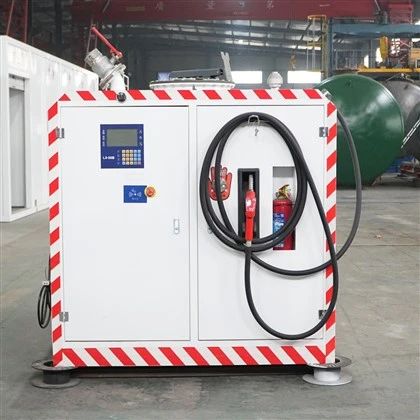
First, let’s get one thing straight: a double-walled tank’s integrity starts long before it leaves our loading dock. We don’t just hoist it onto a truck and hit the road. The first critical step is a pre-transport assessment, and it’s non-negotiable. Every tank we build gets a full inspection before transport: we check the outer wall for weld defects, the inner wall for micro-scratches that could turn into leaks down the line, and the interstitial space—the gap between the two walls that’s supposed to hold leak detection fluid—for any debris or irregularities. We also measure the tank’s center of gravity. Most people don’t realize double-walled tanks are heavier than single-walled units, so their center of gravity is higher. For a standard 10,000-gallon steel double-walled tank, that center of gravity lands roughly 60% of the height from the base. This isn’t a random number; we calculate it using the tank’s material, wall thickness, and total fluid capacity if it’s empty (yes, we usually transport them empty—more on that in a minute). We also confirm the tank’s dimensions against the truck or trailer we’re using: overhang is a big one. Many states have laws limiting load overhang to 3 feet on each side for standard loads, and 2 feet for the rear. We once had a client try to haul a 15,000-gallon tank in a pickup truck without checking overhang, and they got a ticket that cost them more than the transport fee. So step one: confirm your transport equipment matches the tank’s specs, and complete a pre-load inspection to document every detail.
Next, deciding whether to transport the tank full or empty. Let’s make this simple: always transport empty. Wait, why? I’ve heard every argument for transporting full—“it’s less likely to bounce,” “it saves time filling on site”—but those are myths. A full double-walled tank weighs an extra 8,333 pounds for 10,000 gallons of water (or more for heavier fluids), which turns a manageable load into an overweight one. That increases fuel costs, strains the truck’s suspension and brakes, and makes the tank harder to secure. Worse, a full tank doesn’t flex like an empty one, so any uneven road will transfer more shock directly to the welds. We’ve seen a tank delivered full to a gas station site with a cracked bottom seam that wasn’t visible during initial inspection—costing the client $20,000 in repairs and a day of downtime. Empty tanks flex slightly, which absorbs road vibration better, and they’re easier to secure without straining the walls. The only exception? If your site is remote, and you can’t get a full fluid tanker there for site commissioning. In that case, we transport it with just a few feet of fluid in the bottom—enough to keep the inner wall stable, but not so much that it shifts on rough roads. 99% of the time, empty is the way to go.
Now, the most critical part of transport: securing the tank. This isn’t just throwing straps around it. Double-walled tanks have specific load points designed into their outer shell for transport—we weld heavy-duty lift lugs at each corner, positioned to align with the tank’s center of gravity. If someone just straps the tank around the middle, they’re putting pressure on the wrong part. For flatbed transport, which is the most common method for above-ground double-walled tanks, we use four heavy-duty ratchet straps rated for at least 10,000 pounds each—never the thin nylon straps you buy at a hardware store. We attach them to the transport lugs, not the wall itself, and we run them through the trailer’s tiedown points, not over the tank’s top edge—straps over the top can scratch the outer coating, which is a big deal for corrosion protection. We also add corner bumpers: foam or rubber blocks at each end of the tank, between it and the trailer frame, to absorb side impacts. For long hauls (over 500 miles), we add additional “side retention” straps: two per side, running horizontally across the tank, to keep it from shifting if the truck hits a pothole or has to brake hard. I can’t tell you how many times a driver has called us after a rough road saying a tank moved an inch on the trailer—enough to scratch the outer wall or knock a bolt loose. Taking 10 extra minutes to add those side straps eliminates that risk.
Wait, what about tanks that are too big for flatbeds? For tanks over 20,000 gallons, or tall vertical units, we often use lowboy trailers, which have a lower deck and a lower center of gravity to accommodate height limits. The same rule applies: we use the built-in lugs for lifting and securing. We also have to plan for route permits here. In many countries, loads over 8 feet 6 inches wide or 40 feet long require special permits, and you can’t just take the interstate—you have to check for overpass clearances, low-hanging power lines, and narrow bridges. Last year, we had a 25,000-gallon vertical tank that had to go 60 miles through rural areas; we learned the route had a bridge with a 13-foot clearance, and the tank was 13 feet 6 inches tall. We had to pay for a route adjustment and a police escort to flag down cars while we detoured—something that could’ve been avoided with pre-route planning. For oversized loads, always confirm route permits and height/width clearances before you book the truck.
Now, the road itself: driver training is non-negotiable. Not every truck driver is equipped to haul a double-walled tank. This isn’t hauling furniture or boxes—this load is heavy, high-centered, and unbalanced if not secured right. We only work with drivers who have experience hauling industrial storage tanks, and we give them a pre-trip briefing that covers the tank’s dimensions, center of gravity, and any specific securing points. We also provide them with a contact number for our on-site team, in case they run into issues on the road. I once had a driver on a 300-mile trip call us at 2 a.m. saying a ratchet strap had come loose over a rough stretch of highway. By the time we got there, he had re-secured it, but that’s the kind of risk you avoid when you use a driver who knows how to handle this type of load. No new drivers, no general freight carriers—specialized haulers only for double-walled tanks.
Once the tank arrives at your site, the work isn’t done yet. Unloading is almost as risky as transport. Never lift a double-walled tank by its top edge or the outer wall—use the same transport lugs we welded on during manufacturing. We use a crane with a spreader bar, so the weight is evenly distributed across all four lugs, not just two. If you use a single hook, you’ll bend the tank’s inner wall, which compromises the double-walled integrity. When setting it down, use wooden blocks or rubber pads under the base, not concrete directly, to absorb any shock from the final placement. We always do a post-delivery inspection with the client before signing off: check the outer wall for dents or scratches, the interstitial space for any debris that might have gotten in during transport, and the seal between the two walls to make sure nothing shifted. If there’s any damage, we note it on the delivery receipt, and our team can come out for repairs—most small scratches are fixable on site, but we need to catch them before installation.
I know this might sound like a lot of steps, but that’s the point. Double-walled tanks are designed to keep people and the environment safe, but only if they arrive intact. Over the years, we’ve seen clients cut corners on transport to save a few hundred dollars, only to end up paying thousands in repairs or replacements. A double-walled tank isn’t a disposable item—our standard units have a 20-year lifespan with proper care, but that starts with getting it to your site correctly.

If you’re looking to purchase a double-walled tank, or you have questions about transport for your upcoming project, we’re here to help. Our team can walk you through the process, answer any questions about securing, permits, or site prep, and make sure your tank arrives on time and in perfect condition. Don’t take chances with your storage investment—reach out today to discuss your needs.
Explosion Proof Gas Station References
- American Petroleum Institute. (2020). Standard for Aboveground Storage Tanks for Petroleum and Petroleum Products (API 650).
- National Fire Protection Association. (2021). Standard for the Installation of Stationary Pumps for Fire Protection (NFPA 20).
- Steel Tank Institute. (2019). Design and Installation Guidelines for Double-Walled Steel Storage Tanks.
- U.S. Department of Transportation. (2022). Federal Motor Carrier Safety Administration Load Securement Regulations (49 CFR Parts 393).
- Occupational Safety and Health Administration. (2021). Requirements for Hazardous Waste Operations and Emergency Response (29 CFR 1910.120).
Shandong Jingcai Industry and Trade Co., Ltd.
As one of the most professional double-walled tank manufacturers and suppliers in China, we also support customized service. With abundant experience, we warmly welcome you to wholesale high quality double-walled tank in stock here from our factory. Contact us for free sample.
Address: Caojiazhuang Village Industrial Park, Lingcheng Town, Qufu City, Jining City, Shandong Province.
E-mail: shandongjingcai888@gmail.com
WebSite: https://www.sdjingcaicn.com/
