What is the torsion resistance of a steel wire spiral hydraulic hose? Steel Wire Spiral Hydraulic Hose

As a supplier of steel wire spiral hydraulic hoses, I’ve spent a significant amount of time studying and understanding every aspect of these crucial components in hydraulic systems. One fundamental property that often comes up in discussions with customers is the torsion resistance of a steel wire spiral hydraulic hose.
Defining Torsion Resistance
Torsion resistance refers to a hose’s ability to withstand twisting forces without suffering damage or a significant reduction in performance. In a hydraulic system, hoses can be subjected to various types of stress, and torsion is one of them. When a hose twists, it can cause internal stresses on the wire reinforcement, the inner tube, and the outer cover. The torsion resistance of a hose determines how well it can handle these stresses without failing.
The Importance of Torsion Resistance in Hydraulic Systems
In many hydraulic applications, the hoses are often required to move in complex ways. For example, in construction equipment, hydraulic hoses are attached to moving parts such as booms and buckets. As these parts move, the hoses may twist. If the hoses do not have adequate torsion resistance, they can develop kinks, which can restrict the flow of hydraulic fluid. This restriction can lead to a decrease in system efficiency, increased pressure in the system, and ultimately, premature failure of the hose.
In addition, a hose with poor torsion resistance may experience damage to its wire reinforcement. The steel wire spirals in the hose are designed to provide strength and support. When the hose twists, the wires can be subjected to excessive stress, which can cause them to break or become deformed. This not only weakens the hose but can also pose a safety risk, as a broken wire can potentially puncture the inner tube or outer cover, leading to fluid leaks.
Factors Affecting Torsion Resistance
Hose Construction
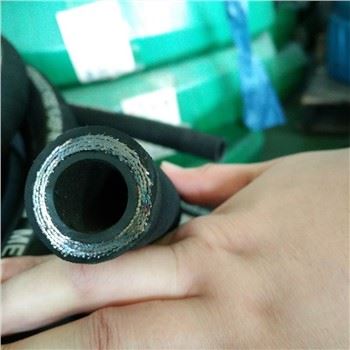
The construction of a steel wire spiral hydraulic hose plays a significant role in its torsion resistance. Hoses typically consist of an inner tube, one or more layers of steel wire reinforcement, and an outer cover. The number and arrangement of the steel wire layers can affect the hose’s ability to resist torsion.
Hoses with multiple layers of steel wire reinforcement generally have better torsion resistance than those with a single layer. The additional layers provide more support and distribute the torsional stress more evenly across the hose. The way the wires are spiraled also matters. Hoses with a balanced spiral design, where the wires in different layers are wound in opposite directions, tend to have better torsion resistance. This balanced design helps to counteract the twisting forces and prevent the wires from becoming overstressed.
Material Selection
The materials used in the construction of the hose also have a significant impact on its torsion resistance. The inner tube material needs to be flexible enough to allow some degree of twisting without cracking. Commonly used inner tube materials include synthetic rubbers such as nitrile butadiene rubber (NBR), which offer good flexibility and resistance to hydraulic fluids.
The steel wire used for reinforcement is another critical factor. High – strength steel wires with good ductility can better withstand torsional stress. The surface treatment of the steel wire, such as镀锌 (galvanization), can also improve its corrosion resistance, which is important as corrosion can weaken the wire and reduce the hose’s torsion resistance over time.
The outer cover material should be tough and abrasion – resistant while also providing some flexibility. Materials like chloroprene rubber (CR) are commonly used for outer covers as they offer good protection against environmental factors and can withstand some degree of twisting without damage.
Hose Size and Shape
The size and shape of the hose can affect its torsion resistance. Generally, smaller diameter hoses tend to have better torsion resistance than larger diameter hoses. This is because the smaller diameter allows the hose to bend and twist more easily without causing excessive stress on the reinforcement.
The length of the hose also matters. Longer hoses are more likely to experience torsion during use, and they may require additional support or a design with higher torsion resistance. The shape of the hose, such as whether it is straight or has pre – formed bends, can also influence its torsion behavior. Pre – formed bends can help to reduce the amount of torsion that the hose experiences in certain applications.
Testing Torsion Resistance
To ensure that our steel wire spiral hydraulic hoses meet the required torsion resistance standards, we conduct a series of tests. One of the most common tests is the torsion test, which involves clamping one end of the hose and rotating the other end by a specified angle. The hose is then inspected for any signs of damage, such as kinking, wire breakage, or outer cover cracking.
We also use advanced simulation techniques to predict the torsion behavior of our hoses. By creating computer models of the hose’s construction and material properties, we can simulate different levels of torsion and analyze the stress distribution within the hose. This allows us to optimize the hose design and ensure that it has the best possible torsion resistance.
Our Commitment as a Supplier
As a leading supplier of steel wire spiral hydraulic hoses, we are committed to providing our customers with hoses that have excellent torsion resistance. We invest heavily in research and development to continuously improve our hose designs and manufacturing processes. Our team of engineers and technicians are constantly working to develop new materials and construction methods that can enhance the torsion resistance of our hoses.
We also offer a wide range of hoses to meet the diverse needs of our customers. Whether you are in the construction, agriculture, or industrial manufacturing industry, we have the right hose for your application. Our hoses are designed and tested to meet or exceed international standards, ensuring that they are safe, reliable, and long – lasting.
Contact Us for Your Hydraulic Hose Needs
If you are in the market for high – quality steel wire spiral hydraulic hoses with excellent torsion resistance, we would be happy to discuss your requirements. Our team of experts can provide you with detailed information about our products, help you select the right hose for your application, and offer competitive pricing and delivery options.
EN Standard Hydraulic Hose Don’t compromise on the performance and safety of your hydraulic systems. Contact us today to start the procurement process and experience the difference that our steel wire spiral hydraulic hoses can make.
References
- "Handbook of Hydraulic Power Systems" by John F. Watton
- "Hydraulic Hose and Fitting Technology" by various industry experts
Hebei Qianli Rubber Products Co., Ltd.
As one of the most professional steel wire spiral hydraulic hose manufacturers and suppliers in China, we have world-leading production equipment and strong manufacturing capabilities. Please feel free to buy bulk durable steel wire spiral hydraulic hose made in China here from our factory.
Address: West industrial Zone, Jing County, Hengshui City, Hebei Province, China.
E-mail: manager@hebeiqianli.com
WebSite: https://www.qianlirubber.com/
